
By Jeannie Barber-Choi
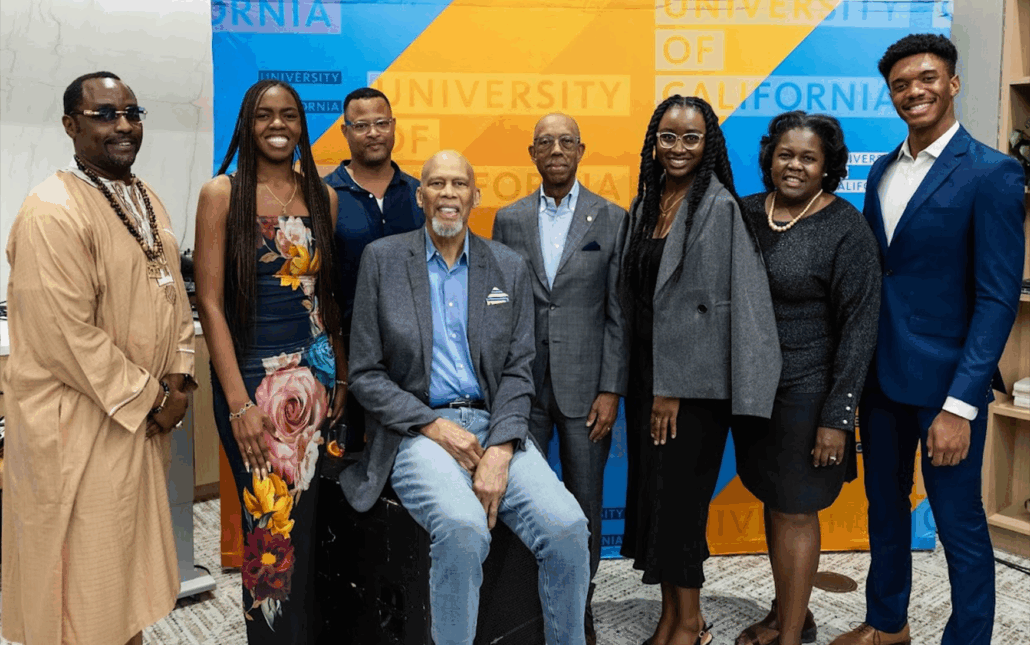
In 1966, Martin Luther King Jr. described health injustice as “the most shocking and the most inhuman” form of inequality. Nearly sixty years later, Naomi Hammonds, who graduated in 2024 with a bachelor’s degree in psychobiology and is currently a graduate student at the UCLA Fielding School of Public Health, is stepping up to address ongoing health inequities through community health research, leadership, and service.
As an undergraduate, Hammonds helped to teach and mentor fellow STEM students as a teaching assistant, and she conducted faculty-mentored research to understand how peer dynamics shape the sense of belonging among Black undergraduates at UCLA, comparing experiences in STEM and non‑STEM academic environments. She helped enhance college life for all undergraduates through her work with UCLA’s Undergraduate Students Association Council (USAC) and served as USAC president her senior year.
Now in the second year of her graduate studies, Hammonds conducts collaborative research on wellness and longevity in the Black community under Courtney Thomas Tobin, associate professor of community health sciences in the Fielding School. She also continues to lead fellow students as president of both the Graduate Student Association and the Black Graduate Student Association — making her the first Bruin to lead student government as both an undergraduate and a graduate student. She works closely with campus leadership and advocates for graduate student health and wellness, while continuing to help teach undergraduates in Life Sciences.
Last year, she received the Abdelmonem A. Afifi Student Fellowship, in recognition of her academic excellence and dedication to service.
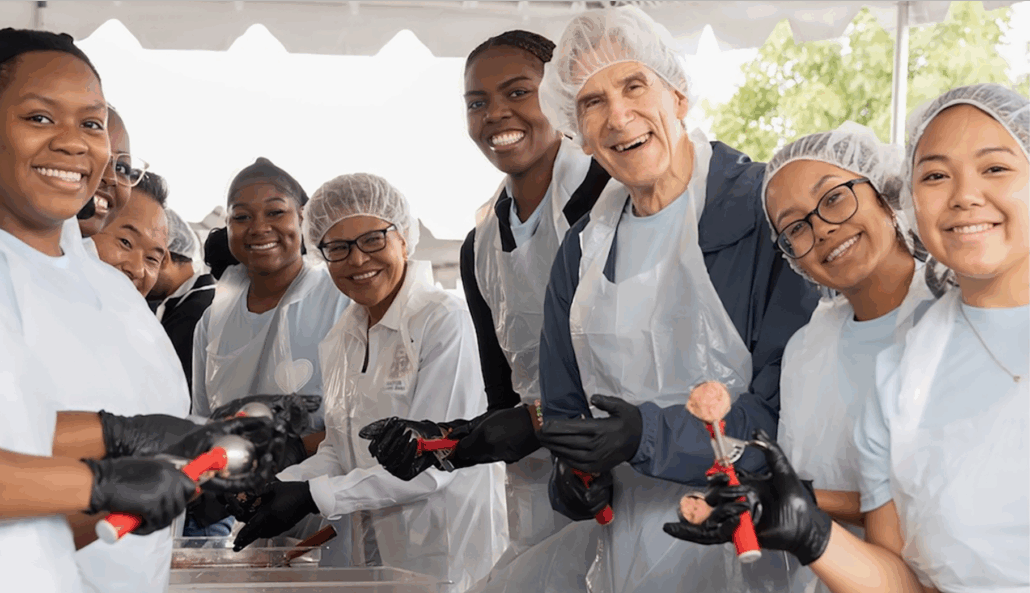
To honor Martin Luther King Jr. Day, designated a National Day of Service, we interviewed Hammonds to learn her perspectives on service, on the value of research and mentorship, and how her UCLA experience continues to shape her path forward.
Some responses have been edited for brevity and clarity.
MLK Day is designated a National Day of Service. How do you think about “service” in this context?
Service is about actively working to improve the lives of others while being intentional, accountable, and guided by respect and integrity. Striving for excellence, I live by these values.
I’ve learned that service is reciprocal: I teach and guide, but I also learn and grow from the people I serve.
I’m passionate about pushing invisible boundaries and creating better conditions so everyone can thrive. Every action taken in service for others contributes to a society I look forward to seeing.
Public service requires intentionally seeking out opportunities to contribute to a greater cause, and anyone can serve and be the change they want to see.
As Martin Luther King Jr. said, “Everybody can be great, because everybody can serve.”
What are your future career goals?
I hope to serve historically excluded and underserved communities as a physician specializing in emergency medicine, where gaps in access and outcomes are apparent. Over time, I aim to transition into teaching and healthcare leadership, using those roles to improve patient outcomes, access to care and equity within health systems.
In what way has your UCLA research experience been valuable to you?
I draw on my research experience every day in my graduate coursework, in my teaching and leadership roles. It informs how I approach challenges and helps me effectively advocate for others.
The Bunche Fellows Program and its mentors have played a foundational role in my academic path. It strengthened my sense of community by providing a uniquely affirming space rooted in shared purpose, care and curiosity. The program helped me see myself as a researcher and scholar — and through it, I found Professor Courtney Thomas Tobin, who has been guiding and mentoring me in my graduate program.
Having mentors who invested in both my academic growth and my personal development made a significant difference in my confidence and aspirations. Alongside other UCLA programs, and my leadership roles, the fellowship program reinforced my commitment to using research in the service of community-centered change.
What makes you proudest as a Bruin?
Honestly, it’s the Bruins themselves who make me proud to be a part of this community. Over my years at UCLA, the people I’ve met — students, faculty, staff, community members, alumni and my peers — have shaped who I am and why I do the work I do. They’ve taught me how to make and take space, the importance of standing up for something, how to use my voice for something bigger than myself, and how to be confident, even in the chaos. Their excellence, resilience, and optimism inspire me every day and make me love this school even more.