
As we observe Black History Month 2026, we spotlight three Life Sciences majors–rising young scholars who dedicated themselves to timely research on conditions related to Black life through the Bunche Fellows Program (BFP). Working alongside graduate fellows and BFP faculty mentors, they developed valuable research skills and clearer visions for their future careers.
Here, in their own words, they share their early perspectives coming into UCLA, and the experiences they’ve found most meaningful over the course of their undergraduate journey.
***
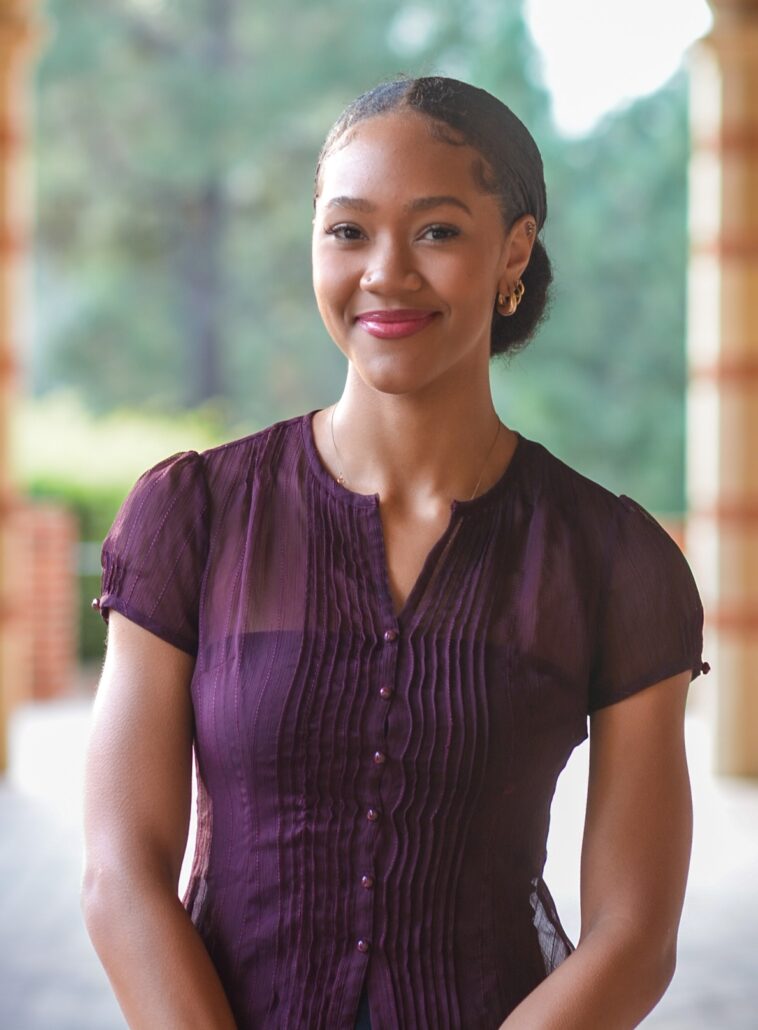
Class of 2027
What were your interests/motivations coming into UCLA?
I came to UCLA on a pre-med track, wanting to gain a strong foundation in science while drawing connections between STEM and social sciences. I was excited to discover that UCLA had an interdisciplinary major that aligned perfectly with my interests. I’m particularly drawn to health disparities research and hope to improve care for socioeconomically disadvantaged communities.
What have been the most helpful/rewarding highlights of your undergraduate experience?
Through the Bunche Fellows Program, I worked with Dr. Terence Keel in the BioCritical Studies (BCS) Lab, where I cross-referenced jail deaths with L.A. County Claims Board archives to identify cases that resulted in lawsuits against the county. I stayed on in the BCS lab to participate in group research using autopsy records to study deaths involving law enforcement in non-carceral settings in San Diego County. Through research in this lab, I’ve seen how protocol is often ignored and responsible parties avoid accountability. Although the subject matter can be emotionally heavy, I find the work very meaningful because it centers on individuals who are often overlooked.
A highlight of my undergraduate experience has been the mentorship I’ve gained from faculty on campus. Being in STEM can feel isolating at times, especially for students who find it difficult to reach out for support and guidance. When I joined the Bunche Fellows Program, I instantly found a mentor in Dr. Ketema Paul. We had conversations and created a plan to reach my long-term goals, and he connected me with research faculty, which led me to start research in the Afshar lab.
Under the guidance of Dr. Yalda Afshar, I’m also doing research to improve pregnancy outcomes for Placenta Accreta Spectrum (PAS), a high-risk condition in which the placenta implants abnormally. PAS can lead to preterm birth and severe hemorrhage during delivery. Because early diagnosis is critical and PAS often presents without clear symptoms, I’m doing research to identify proteins in maternal blood plasma that could serve as early biomarkers for PAS, allowing for earlier diagnosis and proactive life‑saving care.
***
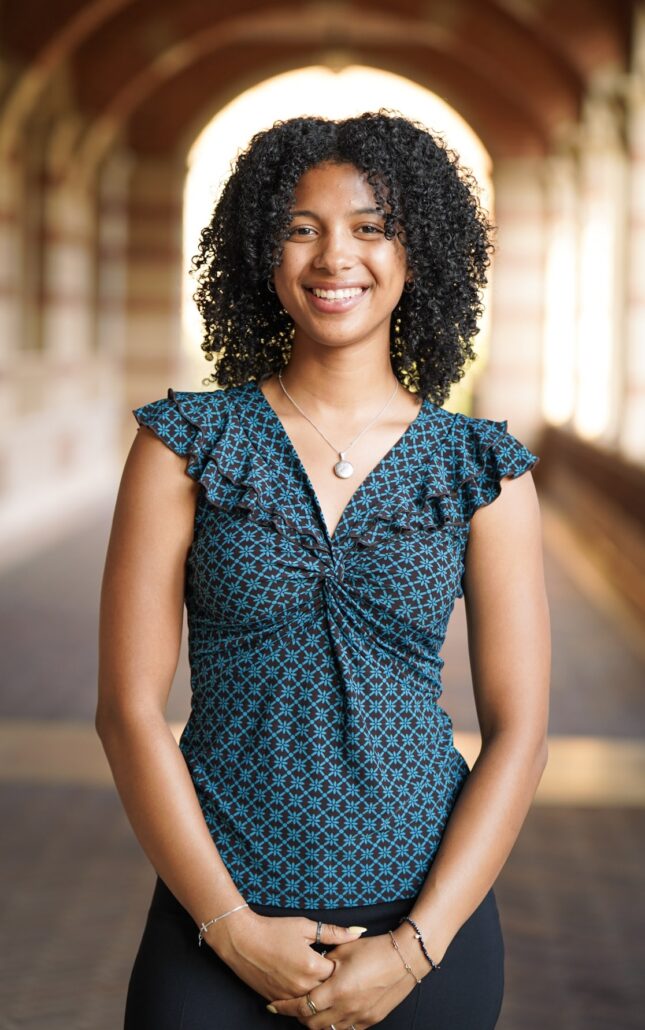
Class of 2026
What were your interests/motivations coming into UCLA?
When I entered UCLA, I wasn’t sure of what career path I wanted to pursue, but I knew I was drawn to science. I wanted to explore my interests both inside and outside the classroom, find my pockets of community, and get to know Los Angeles.
What have been the most helpful/rewarding highlights of your undergraduate experience?
Through the Bunche Fellows Program, I worked with Dr. Kacie Deters on research examining cognitive decline and Alzheimer’s disease, focusing on racial and ethnic disparities, particularly within the Black community. With mentorship in her lab, I studied how family history of Alzheimer’s relates to subjective cognitive decline in cognitively-normal older adults across different racial/ethnic groups.
Joining the lab as a second-year undergrad with little experience, I appreciated the supportive, collaborative environment where I learned from PhD students and fellow undergraduates. They helped me become a better coder, communicator, presenter, and researcher. The mentorship and training I received through the Bunche Fellows Program and the Deters Lab have helped me to deepen my commitment to research that serves marginalized communities, solidified my passion for medicine, and reshaped my understanding of what it means to be both a scientist and an advocate, meaningfully impacting the people around me.
***
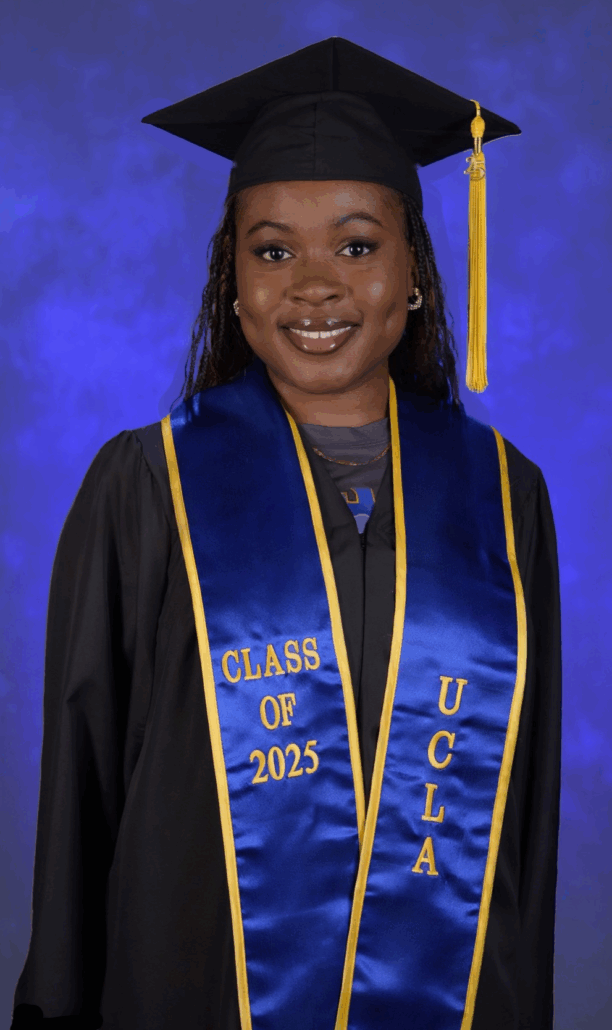
Class of 2025
What were your motivations/interests coming into UCLA?
Immigrating to the United States from Nigeria, I attended high school in South Central Los Angeles. For me, attending a top institution like UCLA was an opportunity to expand beyond the educational, social, and academic boundaries I had been accustomed to. I was motivated to challenge myself in a rigorous academic environment while gaining access to resources, mentorship, and opportunities that would allow me to grow both personally and professionally.
What have been the most helpful/rewarding highlights of your undergraduate experience?
The most rewarding part of my undergraduate experience was my involvement in a variety of social and academic organizations. Being part of these spaces allowed me to build community, develop leadership skills, and find a sense of belonging at a large institution like UCLA. They fostered my values of identity, service, and academic growth. High AIMS, Nigerian Students Association, Academic Support Program, the Black Bruin Resource Center, and the Bunche Research Fellowship Program provided me with support and pushed me to think critically about my role as a student and as future professional.
As part of the Bunche Fellows Program, I did research under the mentorship of Dr. Charles Alexander, focusing on the relationship between immigration status and health outcomes among Black immigrants. I particularly enjoyed centering research on lived experiences through surveys. I was able to critically examine how systems, policies, and social conditions shape health beyond biology. The Bunche Research Fellowship program taught me how to approach research with intention, accountability, and most importantly, with the community in mind. This helped solidify my passion for pursuing work at the intersection of medicine, public health, and social justice.