
UCLA Life Sciences
Key takeaways:
- A record number of California sea lions have come ashore with leptospirosis, a potentially fatal bacterial disease, caused by a pathogenic strain of Leptospira.
- Leptospira is a “zoonotic” pathogen that can cross from one animal species to another to infect a broad range of marine and land-based mammals, including humans.
- UCLA research collaborations are developing tools to identify key drivers of Leptospira transmission and outbreaks in California wildlife.
- This research creates models and tools that can be applied more broadly to other zoonotic pathogens to reduce risks of their spread into human populations.
- Federal funding cuts are thwarting this research needed to reduce the risks of future pandemics.
Disease-causing Leptospira is a growing threat along California’s central coast.
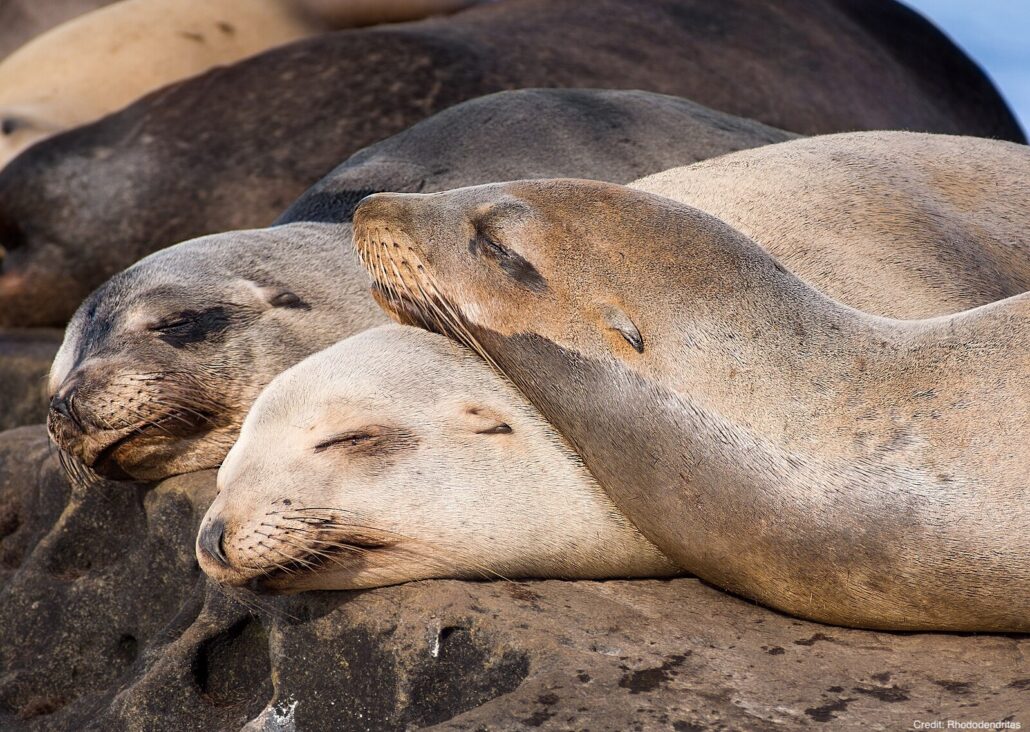
Sick sea lions are stranding along California’s central coast in record-breaking numbers due to an unusually large outbreak of leptospirosis, a potentially deadly bacterial infection caused by a disease-causing strain of Leptospira.
Over the past three months, more than 370 cases of leptospirosis have been confirmed among the stranded sea lions. And according to the Marin-based Marine Mammal Center, two-thirds of the sea lions that come to shore with leptospirosis die from the disease.
The Los Angeles Times and the San Francisco Chronicle have recently reported on this historic outbreak among California sea lions, featuring insights from UCLA experts–James Lloyd-Smith, a professor of ecology and evolutionary biology, and Katherine Prager, a disease ecologist–who have been working with a large team of collaborators to study Leptospira in California’s sea lions.
The Leptospira strain that’s being transmitted among California’s sea lions is a “zoonotic” pathogen, meaning that it can be transmitted across a wide range of mammal species, including humans.
Extensive data collection has laid the foundations for a great case study to understand Leptospira dynamics in sea lions.
Two key collaborators–the NOAA/NMFS California Current Ecosystems Program and the Sausalito-based Marine Mammal Center–have been collecting data on sea lion demographics and Leptospira infections for the past 40 years. From these data, researchers found that for three decades, Leptospira was continually infecting California’s sea lions, then it disappeared for a few years, before returning to cause massive disease outbreaks. What caused this to happen?
Since 2010, Prager has been working with colleagues to collect additional biological samples from individual sea lions, looking for indicators of on-going or past infection.
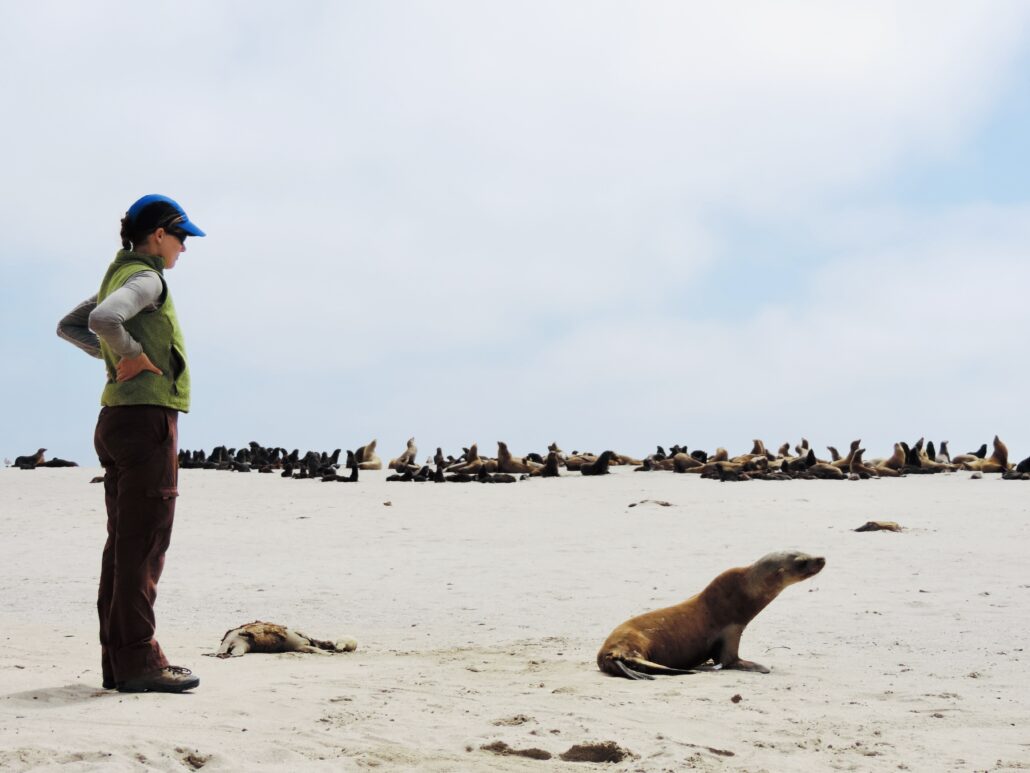
“With four decades of detailed information, on both the host species and the infection–for far-ranging wildlife hosts like the sea lions, this is probably the best case study in the world to learn how Leptospira works, and to fundamentally understand how diseases persist and spread among wildlife populations in a changing world,” says Lloyd-Smith.
UCLA collaborative research is creating computer models that integrate available data to understand disease transmission and impact.
Integrating all the relevant data–including individual sea lion location, age, sex, survival, and biomarkers of infection–UCLA researchers developed computer models to decipher patterns of Leptospira transmission and illness.
Their research found that over the course of 30 years, there was a pattern of annual outbreaks, with larger outbreaks occurring every three to five years. In 2013, this pattern was interrupted for four years, when major environmental anomalies (including an unprecedented marine heatwave) disrupted the sea lions’ ecosystem. When the pathogen returned, it did so with a vengeance, causing even larger outbreaks starting in 2018. This year’s outbreak has topped all previous records.
Beyond sea lions, Leptospira has been found in a wide range of California’s wild mammals. How is it spreading through these populations?
Knowing that Leptospira can infect a wide range of mammals, the research team examined other coastal mammals, looking for the particular strain affecting California’s sea lions.
Among marine mammals, they found this Leptospira in harbor seals, Steller sea lions, northern elephant seals, and southern sea otters.
They found the same bacteria also infects a variety of land-based mammals in Southern California, including urban wildlife such as raccoons, skunks, and coyotes.
Other researchers have shown that this Leptospira infects humans as well, causing heavy burdens in some parts of the world.
How does this strain of Leptospira spread among marine mammals, or between marine and terrestrial species? Who’s infecting whom? Are certain species more likely to transmit the bacteria or serve as reservoirs?
Federal funding cuts have halted this research that can help reduce future pandemic risks from Leptospira and other zoonotic pathogens.
While all the pieces are in place to answer these questions, ongoing cuts to federal research funding have halted their research.
Towards the end of last year, the research team submitted a federal grant proposal that was ranked as highly competitive to merit funding. However, this year, the federal government entirely cut the funding mechanism that supports this area of research.
“Right now, we’re struggling to find any support,” says Prager. “‘The National Science Foundation program that funded infectious disease ecology research was archived this year; the federal program that contributed decades of invaluable data on sea lion demographics (NOAA’s California Current Ecosystems Program) has been dismantled; and while collaborators at the Marine Mammal Center have other sources of funding, they also relied in-part on government funding that’s gone away.”
Lloyd-Smith, Prager, and their colleagues have a detailed plan, decades of existing data, a growing bank of biological samples, and myriad expertise to determine what’s driving disease transmission and outbreaks. They just need funding to move forward.
“With funding, we can find the links that enable the pathogen to move between species and persist in the ecosystem,” Lloyd-Smith says. “This would allow us to see and understand what’s coming, rather than flying blind and always reacting. The models and tools we develop to understand Leptospira can be applied to other zoonotic pathogens that threaten humans–from avian influenza and Mpox, to Ebola and coronaviruses,” says Lloyd-Smith. “We ultimately want to help prevent spillover of zoonotic pathogens, and reduce the risk of future pandemics.”
****
It takes the effort of a large team, each contributing different talents and expertise, to accomplish this work. Collaborators working with Lloyd-Smith and Prager include: lab alumni Benny Borremans, Sarah Helman, and Riley Mummah; and research partners at the Marine Mammal Center; the Marine Mammal Laboratory at NOAA/NMFS California Current Ecosystems Program; UC Santa Cruz; Año Nuevo State Reserve; West Coast Stranding Network; Northern Arizona University; the Centers for Disease Control; Michigan State University; the California, Oregon, and Washington Departments of Fish and Wildlife; and the Monterey Bay Aquarium.

Lloyd-Smith is among a group of experts co-leading a global Lancet Commission to pinpoint ecological and societal contributors to zoonotic spillover and advise world governments on prevention strategies to reduce future risks of pandemics.
To read more and support this research, click here.